
Stamped Concrete Duluth: Patterns, Color, and Sealing
Stamped concrete is a decorative finish made by pressing textured mats into a freshly poured slab so the surface looks like brick, slate, flagstone, or wood plank. For stamped concrete Duluth homeowners put on patios, walkways, driveways, and pool decks, the pattern is only half the decision. Color method, sealer, and winter care decide how it looks ten years from now.
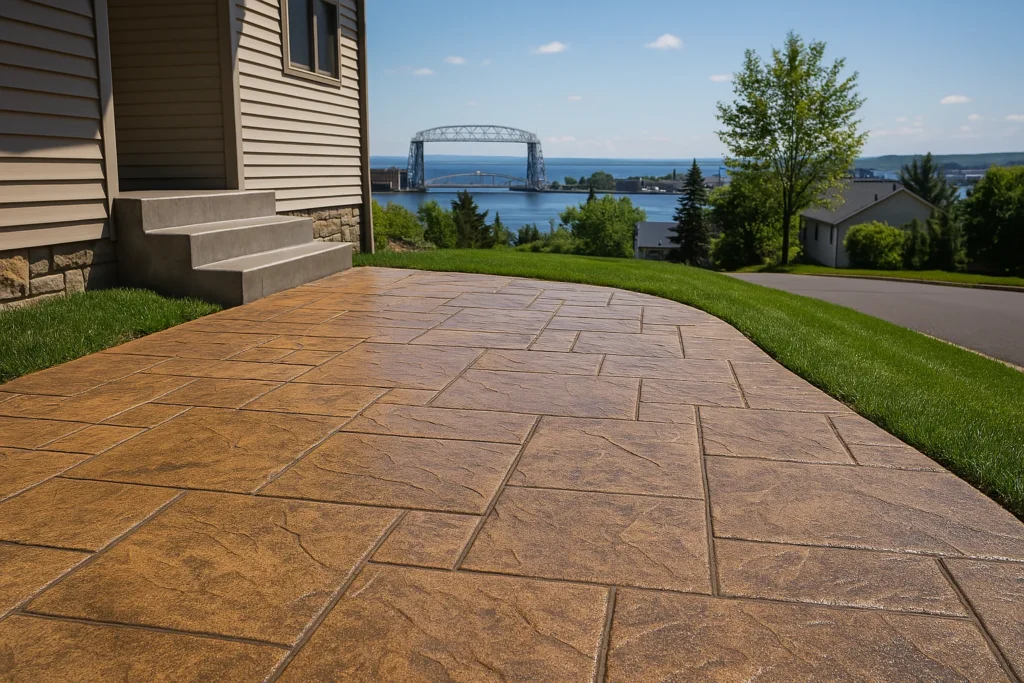
Stamped Concrete Designs: Patterns and Textures
Ashlar slate, herringbone brick, random flagstone, and wood plank are the four most requested designs in the area. Mat makers offer a wide variety of patterns beyond those, each in dozens of colors:
- Ashlar slate: rectangular stones in mixed sizes, tidy enough for front entries.
- Herringbone brick: a tight interlocking grid, often run as a border band.
- Random flagstone: irregular stones with deep grout lines and the closest look of natural stone.
- Wood plank: board grain with end joints, common beside pools and wood decks.
Texture matters as much as the pattern you choose. Texture-only skin mats add stone grain with no grout lines. Deep grout lines hold slush, which is fine on a sitting area but makes a driveway harder to shovel clean. Stained accents or exposed aggregate finishes on the border add a second color and texture without another mat set.
How Color Gets Into the Surface
Color comes in two layers: a base color, then a release agent that leaves a darker shade in the low spots so the pattern reads as real stone or brick.
| Method | Applied | Result | Trade-off |
|---|---|---|---|
| Integral color | Mixed into the batch | Color through the full slab | Softer shades |
| Color hardener | Broadcast on the wet surface | Vivid color, harder top layer | Color only at the top |
| Release agent | Powder or liquid before stamping | Keeps mats from sticking; powder adds contrast | Residue washed off after curing |
| Stain | After curing | Hand-colored highlights | Extra labor |
Judge the base color against roof, siding, and trim, because a large slab in sun reads lighter than a sample chip. Lighter tones also stay cooler underfoot, which matters around a pool. The American Concrete Institute publishes a guide to decorative concrete covering stamping, coloring, and sealing practice.
Stamped Concrete Duluth Projects: Patios, Walkways, Driveways, and Pool Decks
The finish works on almost any exterior slab or outdoor space, but each use calls for a different pattern depth and snow-removal approach.
- Patios and outdoor living areas: a patterned field with a contrasting border gives a high-end look for less than materials like stone or brick.
- Walkways: shallow ashlar or brick patterns are easier on shovels and can tie into new steps and entryways.
- Driveways: on a new driveway, cobblestone or slate patterns add curb appeal (see our driveway services). Use a plastic shovel or a rubber-edged plow, since a steel blade scrapes the protective coat off the high points.
- Pool areas: light colors and a slip-resistant texture.
- Overlays: a stampable overlay can refresh a sound, plain slab, but heaved or badly cracked damaged or aging surfaces need repair first.
If you’re building a new outdoor area or replacing a cracked pathway, stamping gives a look regular concrete with a broom finish can’t match.
How Stamped Concrete Installation Works
Most residential installs take two to three days, depending on the size of the concrete project. The stamping window is short, so the order matters:
- Site preparation: excavate, grade, and compact the base so water drains away from the house.
- Forming: wood or metal forms set the edges, shape, and slope.
- Pouring: an air-entrained exterior concrete mix suited to stamping is placed and floated.
- Coloring: color hardener goes on if used, then the release agent.
- Stamping: stamp mats are pressed in while the surface is workable, and control joints are cut along grout lines so cracks form out of sight.
- Curing and sealing: the slab hardens 48 to 72 hours before foot traffic, then release residue is washed off and sealer applied.
Sealing, Salt, and Slip Resistance
The sealer is there to protect the surface, and it wears out long before the slab does. Durability and a long-lasting color both depend on keeping that coat intact.
How Often to Reseal
Every two to three years, or sooner once water stops beading or the color looks chalky. Wash the slab and let it dry fully first. A cloudy white haze afterward usually means moisture was trapped under a coat rolled on too thick or on a damp day.
Salt and Deicers on Stamped Concrete in Duluth
Skip deicers the first winter while the slab gains strength. After that, never use ammonium nitrate or ammonium sulfate products, which attack the concrete surface chemically. Rock salt wears the coat down, and meltwater that gets past a worn coat freezes in the texture. Sand gives traction without that risk, and a fresh coat in early fall is the best preparation for a Duluth winter.
Slip Resistance on Pool Decks and Steps
A glossy coat over a smooth pattern gets slick when wet or icy. On pool decks, steps, and sloped walks, ask for anti-slip grit in the final coat and a pattern with more relief.
Where a Stamped Finish Falls Short
It’s one continuous slab, so it cracks like one. A crack runs straight through the pattern, patches rarely match the color, and the coat needs renewing. Against pavers, natural stone or brick, it costs less, has no joints for weeds or shifting, and goes in faster, while pavers can be lifted and reset one at a time. The patio surface comparison sets poured concrete, stamped, and paver options side by side.
Start by deciding where the slab goes and how it will be cleared in winter, then choose pattern and color around that. Get a rough number from the Duluth concrete pricing calculator, then contact us for a free estimate on stamped concrete Duluth projects for homeowners and businesses. Every estimate includes a consultation to meet with you to discuss goals, timeline, and budget.
Frequently Asked Questions
How much does stamped concrete cost?
Most projects in Duluth run between $12 and $18 per square foot, depending on the pattern complexity and site prep needed. That’s typically 30-50% less than brick or flagstone, but more than a plain broom finish.
Is stamped concrete hard to maintain?
Not at all. Resealing every two to three years keeps the surface protected. Regular cleaning with a garden hose handles most dirt and debris.
How long does stamped concrete last?
With proper installation and sealing, stamped concrete surfaces last 25 years or more. The local climate demands good base prep and a high-quality sealer renewed on schedule.
Can you resurface existing concrete?
In some cases, yes. A stampable overlay can refresh old or plain slabs without tearing them out, as long as the base slab is sound. Learn more about our repair and resurfacing options.
What is the downside of a stamped finish?
Cracks run through the pattern, repairs rarely match the original color, and the protective coat needs renewing every few years. A sealed, textured slab can also be slippery when wet unless grit goes into the final coat.