
Concrete Repair Duluth, MN
Concrete repair Duluth property owners need usually traces back to one cause: water gets into the surface, freezes, and pushes it apart. Concrete repair is the work of restoring cracked, sunken, or flaking surfaces to safe condition without tearing them out, on slabs, sidewalks, steps, garage floors, patios, and foundation walls. Caught early, a sealed crack or a lifted panel costs a fraction of a new pour.
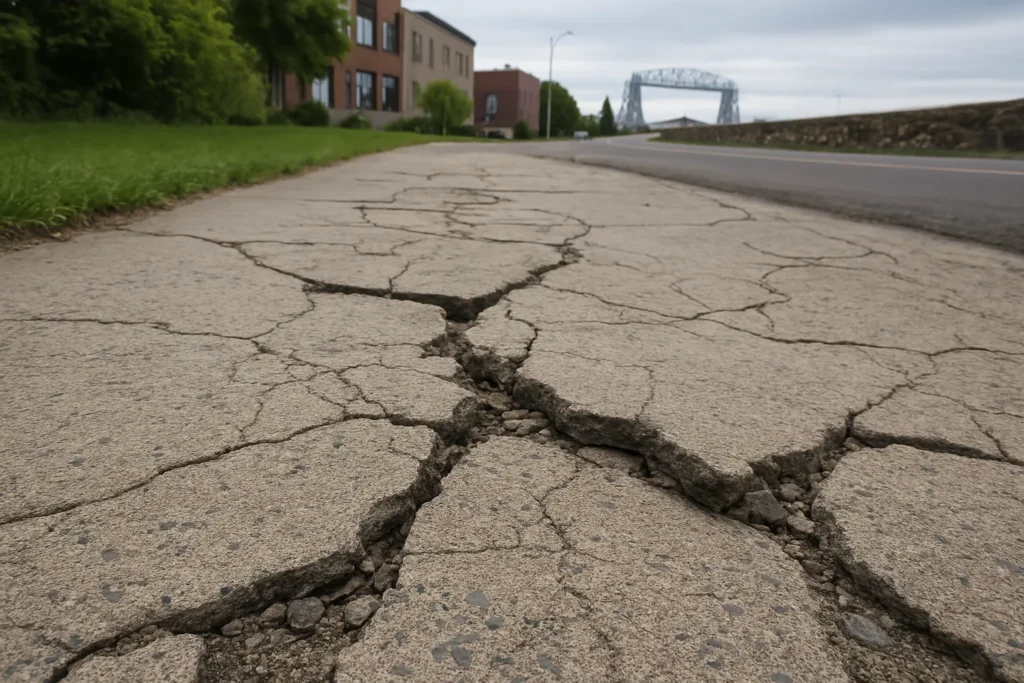
Why Paving Cracks, Heaves, and Flakes Up Here
A Duluth winter attacks paving from three directions: frost in the soil, ice in the pores, and salt on top. Each causes a different kind of concrete damage.
- Freeze-thaw cycling. Water expands about 9 percent as it freezes, widening a hairline crack overnight and letting more water in at the next thaw. Spring and fall swings across 32°F do the most harm.
- Frost heave. Wet, fine-grained soil swells as it freezes and settles unevenly at thaw, which is why walkway panels and step landings end up tilted.
- Deicing salt. Rock salt keeps the surface wet and adds freeze-thaw cycles, so the top layer breaks off in thin flakes (scaling). The Portland Cement Association advises against deicers during a new pour’s first winter.
- Poor drainage. Downspouts that dump beside a pad wash out the gravel base, leaving uneven surfaces and trip edges. Rerouting that water is the long-lasting part of any fix.
What Concrete Repair Duluth Homeowners Call About Most
Most calls involve one of these concrete surfaces, and the right method depends on what is failing underneath.
| Surface | Typical damage | Usual fix |
|---|---|---|
| Garage floors and shed pads | Cracks, pitting from salty slush | Crack fill, patch, or overlay |
| Sidewalk and walkway panels | Heaved or sunken sections | Lifting or panel replacement |
| steps and entryways | Crumbling nosings, steps pulling away from the house | Patch, rebuild nosings, or replace |
| Patio | Settling and cracks near downspouts | Seal or lift; see the patio page for new pours |
| Retaining walls | Leaning, displaced block | Stabilize or rebuild |
| Foundation walls | Stair-step cracks, seepage, bowing | Crack injection or reinforcement |
Driveways take heavier loads and more salt, so those fixes are covered on the driveway service page.
Six Methods, Each Matched to One Failure
Choosing the wrong method is the most common reason a fix fails within a season or two.
Crack Filling and Sealant
Crack filling seals cracks up to roughly 1/2 inch with a flexible sealant so water can’t reach the base. It is the cheapest way to extend the lifespan of your concrete, but it’s maintenance, not a structural fix. Rigid fillers like plain mortar usually pop out after one winter because the panel keeps moving.
Crack Injection for Foundation Walls
Crack injection forces liquid resin into a wall crack until it fills the full thickness. Epoxy bonds dry cracks where structural integrity matters. Polyurethane stays flexible and expands on contact with water, so it suits cracks that leak. Walls that bow inward need a reinforcement assessment first.
Patching Spalls and Scaling
A spall is a chunk broken out of the surface; scaling is shallow flaking. Both get a polymer-modified patching mortar after loose material is chipped back to sound concrete. Feathering a thin patch over weak edges is the classic mistake. It delaminates by spring.
Slab Lifting: Mudjacking or Polyurethane Foam
Lifting pumps material under sunken concrete to raise and level it. Mudjacking uses a cement slurry through holes 1 to 2 inches wide and adds weight to soft soil. Polyurethane foam needs holes about 5/8 inch wide, weighs far less, and cures in minutes, though it usually costs more. Neither helps a panel that is broken into pieces.
Resurfacing Worn Flatwork
Resurfacing bonds a thin overlay to worn but sound existing concrete, restoring traction and aesthetic appeal. It can be colored or textured to match stamped or decorative finishes. It will not cure a moving crack, which telegraphs through within a year or two.
Foundation Repair
Foundation repair addresses shifting, cracking, or bowing walls with crack injection, wall reinforcement, pier systems, or new footings. Foundation issues should be diagnosed before any cosmetic patching, because a patch over an active crack hides the movement without stopping it.
Patch, Lift, or Replace? A Quick Decision Guide
- Cracks under 1/4 inch with level panels on both sides: seal them.
- A slab that sank in one piece: lift it.
- Flaking top layer over a solid, level base: patch or resurface.
- A slab broken into several pieces or heaved in more than one direction: replace it.
- A foundation crack that is widening or leaking: get the wall assessed before anything else.
New concrete for a northern climate should be air-entrained, meaning it holds tiny air bubbles that give freezing water room to expand. For a rough replacement budget, try the pricing calculator.
Masonry Work That Often Fails Alongside Concrete
A settling step pulls on the brick it ties into, and a leaking foundation wall often shows up as crumbling mortar. The range of masonry services includes:
- Chimney and foundation restoration
- Historic masonry restoration for older buildings
- Block wall and retaining wall stabilization
- Tuckpointing, which replaces failed mortar joints with fresh mortar
On older brick homes, repointing mortar should be softer than the brick. Hard modern mortar forces the brick to crack instead of the joint.
Service Area and Free Estimates
The Concrete Duluth team is based in Duluth, MN, and handles residential and commercial work across northeastern Minnesota, including Two Harbors, Hermantown, Superior, and surrounding lakeside communities in both MN and WI. Learn more about our team.
Start by walking your paths, steps, and patio after the snow melts, noting any crack wide enough to hold a coin and any spot where water pools. Then contact us for a free estimate. The season for concrete repair Duluth jobs runs from late spring through early fall, when patching materials can cure above freezing, so book before the first hard frost.
Frequently Asked Questions
Should I repair, resurface, or replace my concrete?
Repair or resurface when the slab is level and in one piece; replace it when it is broken into sections, badly sunken, or structurally compromised. Minor cracks and surface wear usually call for patching. An on-site estimate confirms the most cost-effective path.
How much does concrete repair cost in Duluth?
Most homeowner projects range from $300 for simple crack sealing to $3,000 or more for major leveling or foundation jobs. Price depends on the method, the square footage, and access. A detailed quote shows the exact cost before any task begins.
How long do repairs typically last?
With proper materials and technique, most fixes last 8 to 15 years, even in Minnesota’s harsh climate. Sealant applications should be refreshed every 2 to 3 years for best results, and correcting the drainage problem that caused the damage keeps a fix from failing early.