
Concrete Patios in Duluth, MN
A concrete patio in Duluth, MN lives or dies on what happens below the surface. Freeze-thaw cycles, wet clay, and tracked-in road salt are hard on flatwork, so the patio Duluth families use from May through October has to survive a Lake Superior winter too. We’ve installed hundreds of slabs and surfaces across the Northland, and here’s what goes into one that lasts.
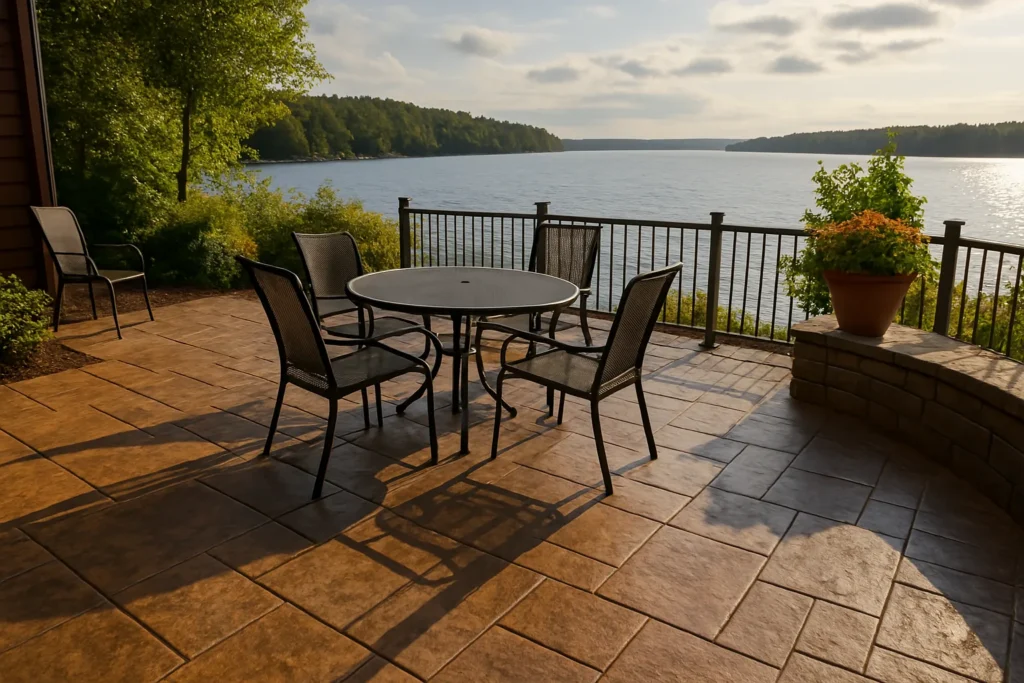
A concrete patio is a ground-level slab, usually 4 inches thick over compacted gravel, that serves as an outdoor living space where you cook, eat, and gather. Unlike a deck, it has no framing to rot or boards to replace.
Poured, Stamped, or Pavers: Choosing the Surface
Plain broom-finished flatwork is the most durable and least expensive surface per square foot. The decorative options cost more and add pattern, color, and texture, and each one handles frost differently.
| Surface | Look | Under frost | Upkeep |
|---|---|---|---|
| Broom-finished slab | Plain, slip-resistant | Strong with an air-entrained mix and good joints | Periodic sealing |
| Stamped slab | Slate or brick look, custom tint | Same strength; sealer protects the finish | Regular resealing |
| Interlocking pavers | Herringbone, running bond, wide variety of tones | Units shift instead of cracking | Joint sand, resetting settled units |
The question we hear most at estimates is pavers versus poured concrete. Our answer usually comes down to maintenance: interlocking units need joint sand topped up, while a slab mostly needs sealer and a careful shovel. For a decorative look without joints to weed, stamped concrete is the middle ground.
The Base Under a Patio Duluth Winters Test Every Year
Most cracked slabs fail from below. Building footings in northern Minnesota go several feet down to get under the frost line, but a patio floats on its base, so the base has to drain and resist frost on its own.
Frost heave is the lifting that happens when water in fine-grained soil freezes and pushes the ground up, and many yards here sit on clay that holds water. The reason a slab heaves is almost always water, not weight, and extra thickness won’t fix a drainage problem.
- Strip topsoil and organic material, which compress over time.
- Compact a gravel base at least 6 inches deep, in lifts.
- Slope the surface about 1/8 to 1/4 inch per foot away from the house.
- Add drain tile where downspouts or a hillside send water across.
We’ve been pouring and finishing slabs in this region for over 15 years, so we check drainage, soil, and frost risk before quoting. We pour when the ground is thawed and nights stay above freezing, usually late spring through early fall, because weather sets the calendar here.
Slab Thickness, Control Joints, and the Mix
Four inches handles foot traffic and furniture; a hot tub needs a thicker slab designed for the load. Control joints are planned weak spots that decide where shrinkage cracks form, and a common rule spaces them no more than 2 to 3 times the thickness in feet (8 to 12 feet on a 4-inch slab). The mix should be air-entrained. Its microscopic bubbles give freezing water room to expand, a key defense against surface scaling.
Designing the Layout: Size, Shape, and Features
Good patio design starts with how you’ll use the outdoor space, then style. Curves and inside corners need more forming and joints than a rectangle, so they cost more and give cracks more places to start.
Sizing a Patio Duluth Families Will Actually Use
Square footage drives the budget. We’ve built everything from 120 square foot side-yard slabs to 800 square foot entertaining areas. Before you commit, set your table and chairs on the lawn and walk around them. If you’re squeezing past chairs, go bigger.
Features to Plan Before the Pour
- A fire pit area clear of the house and overhangs
- Seating walls that seat guests without extra furniture
- Planters and landscape borders that blend the slab into the yard
- Conduit sleeves for lighting or outlets, laid before the pour
Conduit is the one people forget, and a sleeve costs little during forming compared with sawing through the finished surface later. Many projects pair a patio and walkway, and where the back door sits above grade, concrete steps make the transition safe.
How Our Installation Runs, Start to Finish
A standard pour follows five stages, plain or stamped:
- Site visit: measure, check grade and drainage, settle surface and budget.
- Excavation and base: remove sod and soft soil, set the slope, and compact at least 6 inches of gravel.
- Forms: set forms, reinforcement, and any conduit sleeves.
- Pour and finish: place air-entrained concrete, finish it, and cut control joints.
- Cure: keep the slab moist and protected; foot traffic first, furniture later.
We serve Duluth, Superior, and the surrounding areas in MN and WI. If your existing slab is cracked or settling, a concrete repair assessment may cost less than a new patio, and we handle driveway repair too.
Protecting the Slab Through Its First Winter
New concrete is most vulnerable in its first winter, when deicing salt can scale a young surface.
- Use sand, not deicers, for traction the first winter.
- Seal before the first hard freeze and reseal on the sealer’s schedule.
- Shovel with a plastic blade, and don’t chip at ice.
- Point downspouts away from the slab edges.
According to the Concrete Network, properly installed patios can last 25 to 50 years with minimal maintenance. Base work and first-winter care largely decide where yours lands.
Getting an Estimate
For a ballpark number first, try our concrete pricing calculator. Call us today or contact us through the website; we offer free estimates.
Start by measuring the area and noting where water runs during spring melt. Then book a site visit so we can check grade, soil, and access, and if an old slab is already there, have it assessed first, since repair sometimes beats replacement. That order of work is how you get a patio Duluth winters won’t undo in a few seasons.
Concrete Patio Questions We Hear Most
How much does a concrete patio cost in Duluth, MN?
Most projects in the Duluth area cost between $8 and $15 per square foot for a basic pour. Decorative finishes, paver upgrades, and extras like fire pits increase the total. We provide free estimates so you’ll know exactly what to expect.
How long does patio installation take?
A typical residential project takes 3 to 5 days, depending on size and conditions. Larger jobs with stone or paver work may take a full week. We schedule around local conditions to ensure proper curing.
What type of paver design works best in Minnesota?
Interlocking pavers handle freeze-thaw cycles better than most alternatives. We recommend a compacted gravel base at least 6 inches deep. Stone and poured slabs both perform well when installed correctly.